
What Every Italian-American Should Know About Italy
Being Italian-American means inheriting a culture that has given the world pizza, opera, the Renaissance, espresso, Ferrari, and the belief that nobody should leave the dinner table hungry.
It’s a rather impressive résumé.
But how much do you really know about the country your ancestors called home?
Why do Italians consider the number 17 unlucky? Why is ordering a cappuccino after dinner considered unusual? Did Marco Polo really introduce pasta to Italy? And how did a country that once ruled much of the known world only become a unified nation in 1861?
Italy is a country where masterpieces hang in ordinary churches, where entire towns debate the proper way to prepare a particular dish, and where a conversation can be conducted almost entirely through hand gestures.
Its history is extraordinary, its landscapes are spectacular, and its contributions to civilization are difficult to overstate.
So, pour yourself an espresso, slice some good bread, and enjoy these 100 things every Italian-American should know about Italy.
As the Italians say, Impara l’arte e mettila da parte. Learn a skill and set it aside for when you need it.
- Italian Symbols and National Identity
- Italian History Every Italian-American Should Understand
- The Making of Modern Italy
- Italian Geography: Know Your Ancestral Homeland
- Holidays, Folklore, and Traditions
- Italian Words, Sayings, and Expressions
- Food: Separating Tradition From Myth
- Italian Art, Inventions, Music, and Sports
- Italy and Its Remarkable American Connections
- Surprising Things to Know Before Visiting Italy
- The Beauty of Being Italian-American
Italian Symbols and National Identity
1. The significance of the Italian flag
Italy’s national flag, known as the Tricolore, features three vertical stripes: green, white, and red.
One popular interpretation associates green with hope, white with faith, and red with charity. The flag’s historical origins, however, lie in the revolutionary movements of the late 18th century.
2. Why Italy’s national sports teams wear blue
Given the colors of Italy’s flag, the country’s blue sporting uniforms might seem a little puzzling.
The color, known as Savoy blue, honors the royal House of Savoy. Italian national teams are affectionately known as the Azzurri or, for women’s teams, the Azzurre.
3. Italy’s national emblem features a star
The emblem of the Italian Republic combines a five-pointed white star, a cogwheel, an olive branch, and an oak branch.
These elements symbolize Italian identity, labor, peace, and strength. If you were expecting a plate of spaghetti, you’ll have to look elsewhere.
4. Italy is affectionately called the Bel Paese
Bel Paese translates to beautiful country.
The expression has literary roots and reflects Italy’s extraordinary combination of natural scenery, historic architecture, cultural treasures, and Mediterranean landscapes. Few national nicknames have been quite so easy to justify.
5. The Italian national anthem celebrates brotherhood
Known as Il Canto degli Italiani, and popularly as Fratelli d’Italia, Italy’s anthem was written in 1847 during the movement toward national unification.
Its lyrics express patriotism, solidarity, and the desire for freedom from foreign domination.
6. The Italian horn is a good-luck charm
The cornicello, a small horn-shaped charm often worn around the neck, is traditionally believed to protect against misfortune and the evil eye.
It’s particularly associated with southern Italy. Many Italian-Americans wear one without knowing the full history behind it.
7. The Roman wolf is a famous symbol
According to Roman mythology, the twins Romulus and Remus were rescued and nursed by a she-wolf.
Romulus is traditionally credited with founding Rome. The image of the wolf and twins remains one of the city’s most recognizable symbols.
8. Italians celebrate Republic Day on June 2
The holiday commemorates the 1946 referendum in which Italians voted to replace their monarchy with a republic.
Celebrations include ceremonies, military parades, and displays of the national flag. It’s an important milestone in the establishment of modern democratic Italy.
9. The name Italia may have ancient roots in cattle
One theory suggests that the name Italy derives from an ancient word associated with calves or cattle.
The name originally referred to a smaller area in southern Italy before being applied to the broader peninsula. Its precise linguistic origins remain debated.
10. Italians identify strongly with their hometowns
The concept of campanilismo describes intense loyalty to one’s local community. The word derives from campanile, meaning bell tower.
Pride traditionally extended to the area within hearing distance of one’s church bells. This helps explain some rather enthusiastic rivalries between neighboring Italian towns.
Italian History Every Italian-American Should Understand
Italy’s history covers thousands of years. Trying to summarize it over an Italian family dinner might require serving a second dessert.
11. Ancient Rome was not modern Italy
The Roman Empire once controlled vast territories across Europe, northern Africa, and the Middle East.
Although Rome was its historical center, the empire encompassed countless peoples and cultures. Modern Italian national identity developed many centuries later.
12. Rome was traditionally founded in 753 BC
According to legend, Romulus founded Rome on April 21, 753 BC.
Archaeologists have uncovered evidence of early settlements in the area, though the traditional founding story blends mythology and history. Romans continue to celebrate their city’s legendary birthday.
13. Latin gave birth to several modern languages
The language of ancient Rome evolved over centuries into the Romance languages, including Italian, French, Spanish, Portuguese, and Romanian.
Latin also contributed extensively to English scientific, legal, medical, and religious vocabulary. Your ancestors’ linguistic influence may be hiding in your dictionary.
14. Roman engineering was centuries ahead of its time
The Romans constructed sophisticated roads, bridges, aqueducts, public baths, and buildings.
Some of their structures survive nearly two thousand years later. Anyone who has recently encountered a pothole on a newly paved American highway might find this particularly impressive.
15. Pompeii preserved an extraordinary moment in history
In AD 79, Mount Vesuvius erupted, burying Pompeii and neighboring communities beneath volcanic material.
Excavations revealed houses, artwork, streets, bakeries, and other details of Roman daily life. Visiting Pompeii offers an extraordinary glimpse into a world that suddenly ceased to exist.
Explore our Marcus Aurelius Quotes and Meditations.
16. The Western Roman Empire fell in AD 476
The removal of the last Western Roman emperor traditionally marks the end of the Western Roman Empire.
But Roman culture didn’t simply disappear. Its language, laws, architectural traditions, religious institutions, and political ideas continued to influence European civilization.
17. Italy was once a collection of independent states
Before unification, the Italian peninsula was divided among kingdoms, republics, duchies, and territories governed by competing powers.
Venice, Florence, Genoa, Milan, and Naples developed distinctive political and cultural traditions. Those regional differences remain fundamental to understanding Italy today.
18. Venice was once a maritime superpower
The Republic of Venice developed an extensive trading network and became one of Europe’s wealthiest political powers.
Its merchants connected Europe with the eastern Mediterranean and beyond. The remarkable buildings lining Venice’s canals reflect centuries of accumulated commercial success.
19. Florence helped launch the Renaissance
Beginning in the 14th century, Florence emerged as a center of artistic, intellectual, and scientific innovation.
The Renaissance transformed European understanding of humanity, nature, mathematics, and beauty. Few cities have accomplished so much with so little geographical space.
20. The Medici family changed the course of art history
The powerful Florentine banking family supported artists, architects, scholars, and scientists.
Its patronage helped nurture extraordinary cultural achievements. Apparently, having a wealthy benefactor was the Renaissance equivalent of securing excellent funding for a creative project.
The Making of Modern Italy
21. Italy became a unified kingdom in 1861
The Kingdom of Italy was proclaimed on March 17, 1861.
Remarkably, the United States was already established and approaching its Civil War when Italy became a unified kingdom. An ancient civilization had become a relatively young nation.
22. Italian unification is known as the Risorgimento
The word translates roughly to resurgence or rebirth.
The movement involved revolutionaries, politicians, intellectuals, soldiers, and ordinary citizens who sought independence and national unity. Their efforts reshaped the political map of Europe.
23. Giuseppe Garibaldi was a revolutionary hero
Garibaldi led the famous Expedition of the Thousand in 1860, helping overthrow the Kingdom of the Two Sicilies.
His victories contributed significantly to Italian unification. The distinctive red shirts worn by his volunteers became an enduring revolutionary symbol.
24. Count Cavour was a master political strategist
Camillo Benso, Count of Cavour, used diplomacy, political organization, and strategic alliances to advance Italian unification.
While Garibaldi became famous for military exploits, Cavour demonstrated that changing the course of history sometimes requires considerable negotiating ability.
25. Rome was not unified Italy’s first capital
Turin served as the original capital of the Kingdom of Italy.
Florence became the capital in 1865, followed by Rome in 1871. Italy took the scenic route toward settling on its capital city.
26. Southern Italy experienced significant economic hardship
After unification, substantial economic differences persisted between northern and southern Italy.
Poverty, limited agricultural opportunities, political instability, and other challenges contributed to widespread emigration. These conditions help explain why so many Italian-American families trace their roots to southern Italy and Sicily.
27. Mussolini established a fascist dictatorship
Benito Mussolini became prime minister in 1922 and subsequently consolidated dictatorial power.
His regime suppressed political opposition, pursued imperial expansion, introduced antisemitic racial laws, and allied Italy with Nazi Germany. This painful chapter remains central to understanding modern Italian democracy.
28. Italy changed sides during World War II
Following Mussolini’s removal from power in 1943, Italy signed an armistice with the Allies.
German forces occupied much of the country, and fighting continued. Italians experienced occupation, civil conflict, resistance, persecution, and enormous suffering before the war ended.
29. Italy celebrates Liberation Day on April 25
The national holiday commemorates the liberation of Italy from Nazi occupation and fascist rule in 1945.
It recognizes the contributions of the Italian resistance and the struggle for freedom. Its historical and democratic significance remains profound.
30. Modern Italy is a founding member of European integration
Italy was among the six founding countries of the European Economic Community established in 1957, a predecessor of the European Union.
A country shaped by centuries of political fragmentation helped pioneer a new era of European cooperation.
Take the 150 Questions Trivia Challenge and see how you compare.
Italian Geography: Know Your Ancestral Homeland
Paese che vai, usanza che trovi. Wherever you go, you’ll find different customs.
Few countries illustrate this Italian proverb better than Italy itself.
31. Italy has 20 regions
Italy’s regions include Tuscany, Lombardy, Campania, Calabria, Sicily, Veneto, and others.
Five have special autonomous status. Every region possesses distinctive culinary traditions, landscapes, architecture, history, and cultural characteristics. Visiting one region doesn’t mean you’ve experienced them all.
32. Italy is approximately the size of Arizona
Italy covers roughly 116,000 square miles.
Its relatively modest size makes the country’s accomplishments in art, architecture, literature, science, fashion, and cuisine particularly remarkable. There’s an extraordinary amount of culture packed into that famous boot.
33. Italy has two major mountain ranges
The Alps stretch across northern Italy, while the Apennines run down much of the peninsula.
These mountains have influenced transportation, settlement, regional identities, and agricultural practices. Italy certainly offers considerably more than sunny Mediterranean beaches.
34. Sicily is the Mediterranean’s largest island
Sicily’s culture reflects influences from ancient Greeks, Romans, Arabs, Normans, Spanish rulers, and others.
Its cuisine, architecture, language, and traditions reveal this diverse heritage. Understanding Sicily requires far more than watching a few American gangster movies.
35. Sardinia has a distinctive cultural identity
Italy’s second-largest island features a fascinating history, unique archaeological sites, beautiful beaches, and distinctive linguistic traditions.
Its ancient stone structures, known as nuraghi, reveal a sophisticated prehistoric civilization. Sardinia is far more than an attractive Mediterranean vacation destination.
36. Italy surrounds two independent countries
Vatican City and San Marino are independent sovereign states entirely surrounded by Italy.
Vatican City is the smallest country in the world by area. San Marino, meanwhile, claims an extraordinary republican tradition stretching back many centuries.
37. The Po is Italy’s longest river
Flowing across northern Italy, the Po supports one of the country’s most important agricultural regions.
Its fertile valley produces crops that contribute significantly to Italian cuisine, including rice used in risotto. Geography has a wonderful influence on dinner.
38. Italy has several active volcanoes
Mount Etna, Mount Vesuvius, and Stromboli are among Italy’s best-known volcanoes.
Etna is particularly active. Volcanic activity has brought destruction but also helped create fertile agricultural soils, dramatic landscapes, and distinctive growing conditions for regional wines.
39. Venice was built across numerous islands
Venice developed in a shallow lagoon, eventually connecting its islands through bridges and canals.
Many historic buildings rely on wooden foundations driven into the underlying ground. The city offers extraordinary proof of what people can accomplish when ordinary building sites are unavailable.
40. The Amalfi Coast is spectacular
This stretch of southern Italian coastline features colorful villages, steep cliffs, terraced lemon groves, and magnificent Mediterranean views.
Its narrow roads also provide an excellent opportunity to reconsider your decision to rent the largest available automobile.
Holidays, Folklore, and Traditions
Italian traditions frequently combine history, religion, family, neighborhood celebrations, and generous quantities of food.
41. La Befana brings children presents
According to Italian folklore, an elderly woman called La Befana travels on a broomstick and delivers gifts to children before Epiphany on January 6.
Traditionally, well-behaved children receive treats, while naughty children receive coal. Her American colleague Santa Claus uses a remarkably similar performance evaluation system.
42. Italy helped popularize Christmas Nativity scenes
St. Francis of Assisi organized a Nativity reenactment at Greccio in 1223, helping establish a beloved Christian Christmas tradition.
Italian presepi, or Nativity scenes, can become remarkably elaborate, sometimes featuring entire miniature villages populated with merchants, musicians, and craftsmen.
43. Panettone originated in Milan
The familiar tall, dome-shaped Christmas bread typically contains raisins and candied citrus peel.
Numerous charming legends explain its invention, although its precise origins are uncertain. Today, panettone has become an international holiday favorite.
44. Ferragosto is Italy’s great summer holiday
Celebrated on August 15, Ferragosto has roots in ancient Roman festivities and coincides with the Catholic Feast of the Assumption.
Families often spend the holiday enjoying relaxing meals, vacations, or outings. August is traditionally an important vacation period in Italy.
45. Venice celebrates Carnival in spectacular fashion
Venetian Carnival is famous for its elaborate masks and costumes.
Historically, masks offered wearers a degree of anonymity that could transcend social distinctions. Today, the festivities attract visitors eager to experience a particularly elegant form of dressing up.
46. Italians associate the number 17 with bad luck
While Americans often consider 13 unlucky, traditional Italian superstition assigns particular misfortune to the number 17.
One explanation involves rearranging the Roman numeral XVII into VIXI, Latin for I have lived, implying that life has ended.
47. The evil eye is a familiar Italian superstition
Known as malocchio, the evil eye is traditionally associated with envy and harmful intentions.
Protective gestures, charms, and folk remedies developed around the belief. If your grandmother had an unusual ritual for dealing with jealousy, she may have been preserving a centuries-old tradition.
48. Lentils bring good luck on New Year’s Eve
Many Italians eat lentils around the beginning of the new year.
Their resemblance to small coins symbolizes prosperity. The tradition often accompanies pork dishes such as cotechino or zampone. Financial planning never tasted so good.
49. Italians celebrate name days
An onomastico, or name day, celebrates the feast day of the saint associated with a person’s given name.
The custom remains significant in many families and communities. Having an extra occasion to receive congratulations, enjoy cake, or gather with relatives seems eminently sensible.
50. Siena’s famous horse race is fiercely competitive
The Palio di Siena takes place in the city’s historic Piazza del Campo, traditionally twice each summer.
Neighborhood districts known as contrade compete for glory. Residents’ loyalties make most American neighborhood sporting rivalries look rather restrained.
Italian Words, Sayings, and Expressions
Chi va piano, va sano e va lontano. Those who go slowly go safely and far.
Italian is a language that rewards patience, enthusiasm, and a willingness to occasionally embarrass yourself.
51. Standard Italian developed from Tuscan speech
The literary contributions of Dante, Petrarch, and Boccaccio helped establish the prestige of the Tuscan language, particularly the Florentine dialect.
Following national unification, standard Italian spread more widely through education, media, and public institutions. Your ancestors may originally have spoken a different regional language.
52. Italian regional languages are remarkably diverse
Sicilian, Neapolitan, Venetian, Sardinian, and other regional linguistic varieties have distinctive histories and structures.
Some are recognized by linguists as languages in their own right. An Italian-American familiar with a grandmother’s Sicilian expressions may find standard Italian surprisingly different.
53. Ciao was originally an expression of service
The familiar greeting developed from a Venetian expression derived from a word meaning “servant” or “slave,” conveying courtesy.
Today, ciao informally means both hello and goodbye. It’s one of the most efficient conversational inventions ever exported by Italy.
54. Grazie is pronounced with two syllables
Many English speakers pronounce the word as graht-see, but the final vowel should also be heard.
It sounds approximately like GRAHT-see-eh, with the latter sounds flowing together. A little extra effort will make your expression of gratitude sound more authentically Italian.
55. Prego has several meanings
Prego can mean you’re welcome, please go ahead, or come in, depending on the circumstances.
It’s an impressively versatile word. Learning it will make numerous everyday interactions in Italy considerably easier to understand.
56. Mangia means eat
The familiar imperative mangia! will immediately resonate with anyone raised in a traditional Italian-American household.
It was often less of a suggestion than an instruction. Declaring yourself full did not necessarily constitute an acceptable defense.
57. Allora is a remarkably useful word
Depending on how it’s used, allora can mean then, so, well, or in that case.
It’s useful for beginning conversations, thinking aloud, or moving discussions in another direction. The Italian language occasionally provides its speakers with built-in deliberation time.
58. Italians have a delightful word for strolling
The passeggiata is a leisurely walk, often taken in the late afternoon or evening.
It’s a chance to socialize, enjoy the surroundings, and see familiar faces. Imagine exercising without tracking your steps or worrying about your heart rate.
59. In bocca al lupo means good luck
Literally translating to into the wolf’s mouth, this expression is traditionally used to wish someone good luck.
A customary response is crepi il lupo, although some Italians prefer alternatives that express more affection for the wolf.
60. La dolce vita means the sweet life
The expression evokes pleasure, beauty, leisure, and an appreciation for life’s finer moments.
It became internationally famous through Federico Fellini’s 1960 film of the same name, although the film itself offers a more complicated examination of pleasure and fulfillment.
Food: Separating Tradition From Myth
In Italy, the question of what constitutes authentic Italian food can inspire considerable debate.
And occasionally considerable volume.
61. Marco Polo didn’t introduce pasta to Italy
Despite a popular legend, pasta was known in Italy before Marco Polo returned from Asia in the late 13th century.
The development of pasta involved multiple cultures and centuries of culinary evolution. The explorer had plenty of genuine accomplishments without this one.
62. Modern pizza developed in Naples
Although flatbreads have existed for thousands of years, Naples became particularly important in the development of modern pizza.
The traditional art of Neapolitan pizza-making received UNESCO recognition as cultural heritage in 2017. Finally, an international organization officially recognized what pizza lovers already understood.
63. Pizza Margherita has a royal legend
According to a popular story, a pizza prepared for Queen Margherita in 1889 featured tomatoes, mozzarella, and basil to represent the Italian flag.
Historians have questioned details of the account. Nevertheless, the combination remains a delicious expression of Italian national colors.
64. Tomatoes aren’t native to Italy
Tomatoes originated in the Americas and reached Europe following transatlantic exploration.
It took centuries for them to become central to Italian cuisine. Imagine explaining to an ancient Roman that his descendants would someday become internationally famous for tomato sauce.
65. Spaghetti and meatballs are primarily Italian-American
Italian cuisine certainly includes pasta and meatballs, known as polpette.
But the familiar American combination of spaghetti, large meatballs, and abundant tomato sauce developed largely through immigrant cooking traditions. It’s a wonderful example of cultural adaptation.
66. Fettuccine Alfredo really does have Italian origins
The dish associated with Roman restaurateur Alfredo di Lelio traditionally featured pasta, butter, and Parmesan cheese.
American adaptations frequently incorporate cream, chicken, and other additions. Ordering the familiar American version in Italy may produce a somewhat unexpected result.
67. Pepperoni pizza presents a linguistic challenge
In Italian, peperoni means bell peppers.
The spicy cured sausage Americans call pepperoni is an Italian-American creation. If you’re looking for something similar in Italy, ask about salame piccante. Otherwise, you might receive a particularly colorful vegetable pizza.
68. Parmesan and Parmigiano Reggiano aren’t always the same
Authentic Parmigiano Reggiano is produced according to specific requirements in designated areas of northern Italy.
Every wheel represents considerable time, skill, and craftsmanship. The contents of an inexpensive plastic shaker might therefore come as something of a disappointment.
69. Garlic bread is largely an Italian-American favorite
Italy has traditional preparations such as bruschetta, which can feature grilled bread rubbed with garlic and drizzled with olive oil.
The familiar American interpretation involving butter, abundant garlic, and sometimes melted cheese developed as its own culinary tradition.
70. Italians generally enjoy cappuccino in the morning
Cappuccino is traditionally considered a breakfast or morning beverage.
After lunch or dinner, many Italians prefer espresso. Nobody will arrest you for ordering cappuccino at night, but you may immediately establish your credentials as a visitor.
Italian Art, Inventions, Music, and Sports
Italy’s cultural influence is difficult to summarize without making the rest of the world feel slightly unproductive.
71. Leonardo da Vinci was the ultimate Renaissance man
Leonardo was a painter, inventor, engineer, anatomist, and extraordinarily curious observer of the natural world.
His paintings include the Mona Lisa and The Last Supper. His notebooks reveal a mind interested in practically everything imaginable.
72. Michelangelo considered himself primarily a sculptor
Despite famously painting the Sistine Chapel ceiling, Michelangelo regarded sculpture as his central artistic calling.
His David and Pietà are among history’s most celebrated sculptures. It’s rather humbling to contemplate what he accomplished in a secondary area of expertise.
73. The piano was invented in Italy
Around 1700, Bartolomeo Cristofori developed an early piano in Florence.
Unlike the harpsichord, his instrument enabled musicians to vary the volume of notes according to their touch. The invention transformed musical expression and composition worldwide.
74. Italy gave the world opera
Opera developed in Italy around the end of the 16th century.
Composers such as Verdi, Puccini, and Rossini subsequently produced some of the world’s most celebrated operatic masterpieces. Italians established that an emotional disagreement could sometimes benefit from a full orchestra.
75. Galileo changed our understanding of the universe
Galileo Galilei made groundbreaking observations using improved telescopes, including discoveries involving Jupiter’s moons.
His advocacy of a sun-centered planetary system brought him into conflict with religious authorities. His work helped establish the foundations of modern observational science.
76. Alessandro Volta invented an early electric battery
Volta developed the voltaic pile around 1800, providing a practical source of continuous electrical current.
The unit of electrical potential, the volt, honors his contribution. Every time you charge your phone, there’s an Italian scientific achievement in the background.
77. Italy helped develop modern radio communication
Guglielmo Marconi conducted pioneering work in long-distance wireless communication.
He shared the 1909 Nobel Prize in Physics for contributions to wireless telegraphy. His achievements helped establish technologies that eventually connected people across continents and oceans.
78. Ferrari embodies Italian automotive passion
Enzo Ferrari established a company that became internationally synonymous with racing, performance, and automotive design.
Ferrari’s famous prancing horse is one of the world’s most recognizable commercial symbols. Apparently, Italy applies the same appreciation for beauty to automobiles as it does to sculpture.
79. Italy has won four men’s soccer World Cups
Italy’s victories came in 1934, 1938, 1982, and 2006.
Soccer, known as calcio, inspires intense devotion throughout the country. The rivalry between club supporters can transform otherwise agreeable dinner companions into passionate political-style adversaries.
80. Cycling is another great Italian sporting tradition
The Giro d’Italia is one of professional cycling’s three Grand Tours.
Italian cycling legends include Fausto Coppi and Gino Bartali. Bartali is also remembered for risking his safety while helping persecuted Jews during World War II.
Italy and Its Remarkable American Connections
Italian immigrants brought their languages, cooking traditions, religious customs, craftsmanship, and ambitions to America.
The United States has been considerably more interesting ever since.
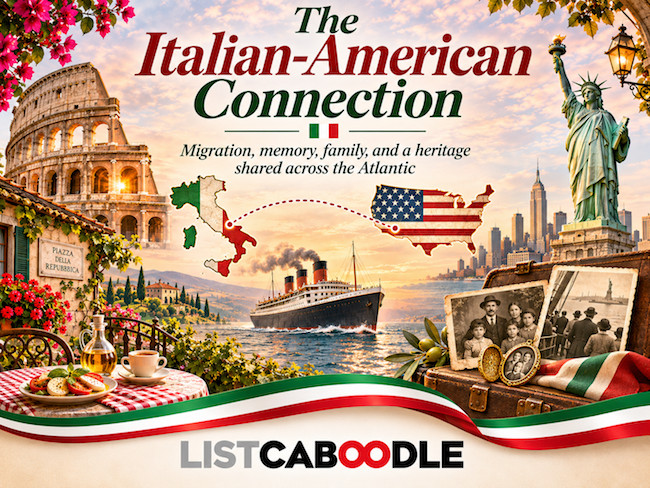
81. Millions of Americans claim Italian ancestry
More than ten million Americans identify as having Italian ancestry.
Communities developed throughout the United States, particularly in New York, New Jersey, Massachusetts, Pennsylvania, Illinois, and California. Italian cultural influences now extend far beyond those original neighborhoods.
82. Italian immigration accelerated in the late 19th century
Between approximately 1880 and 1920, more than four million Italians arrived in the United States.
Many came from southern Italy and Sicily, seeking economic opportunities unavailable in their homeland. Their journeys established the foundations of countless Italian-American families.
83. Many Italian immigrants initially intended to return home
Some people traveled to America to earn money before returning to their families in Italy.
These temporary migrants became known as birds of passage. Others eventually settled permanently, bringing relatives and establishing communities that maintained strong connections with their hometowns.
84. Italian immigrants encountered considerable discrimination
Italian newcomers faced ethnic prejudice, employment discrimination, hostility toward Catholics, and violence.
In 1891, a mob in New Orleans lynched 11 men of Italian origin. The tragedy illustrates the serious challenges Italian immigrants faced in gaining acceptance in American society.
85. Ellis Island didn’t routinely change immigrants’ surnames
Contrary to a widespread family legend, immigration officials generally worked from passenger manifests prepared before travelers arrived.
Many name changes occurred later through personal choice, misunderstandings, or assimilation. Your ancestor’s original surname may still be discoverable in historical records.
86. America was named after an Italian explorer
The name America honors Amerigo Vespucci, a Florentine navigator and explorer.
A European cartographer used a Latinized version of his given name on a world map in 1507. Italy’s connection to American identity begins with the very name of the continent.
87. An Italian-born artist decorated the U.S. Capitol
Constantino Brumidi created numerous paintings and frescoes inside the United States Capitol, including The Apotheosis of Washington in the Capitol dome.
Sometimes called the Michelangelo of the United States Capitol, he left an extraordinary artistic legacy in America’s most important legislative building.
88. Italian-Americans transformed American sports
Joe DiMaggio, Yogi Berra, Rocky Marciano, Mario Andretti, and other athletes became American sporting legends.
Their accomplishments helped establish Italian-American cultural pride at a time when immigrant families were still overcoming prejudice and gaining broader social acceptance.
89. An Italian-born woman became America’s first canonized citizen
Mother Frances Xavier Cabrini founded schools, hospitals, orphanages, and other institutions serving immigrants and disadvantaged communities.
In 1946, she became the first U.S. citizen canonized as a Catholic saint. She is remembered as the patron saint of immigrants.
90. Italian citizenship rules have changed
Many Italian-Americans have historically pursued citizenship through jure sanguinis, meaning right of blood.
However, Italian legislation enacted in 2025 significantly restricted eligibility for many people born abroad. Family ancestry alone does not guarantee qualification. Consult current official Italian consular guidance before applying.
Surprising Things to Know Before Visiting Italy
Quando a Roma vai, fai come vedrai. When you go to Rome, do as you see others doing.
91. Italians don’t usually eat dinner early
Dinner in Italy often begins later than in the United States, particularly in southern regions.
Restaurants may not open until the evening. Americans accustomed to eating at 5 o’clock might discover that their dinner reservations coincide with someone else’s afternoon snack.
92. Italian meals traditionally follow several courses
A formal Italian meal may feature antipasti, a first course, a second course, side dishes, dessert, and coffee.
Everyday meals are often much simpler. However, eating at an Italian family celebration can require the endurance of a marathon runner.
93. A bar in Italy is often a coffee shop
An Italian bar typically serves espresso, pastries, snacks, and alcoholic beverages.
Customers frequently enjoy their coffee while standing at the counter. Sitting at a table, particularly in tourist areas, can sometimes result in a higher price.
94. Tipping customs differ from American practices
Tipping in Italy is generally less obligatory than in the United States.
Restaurant bills may include a coperto, or cover charge, which is not the same as a tip. A modest gratuity for excellent service is often appreciated.
95. The Italian gesture vocabulary is extensive
Hand gestures can communicate confusion, frustration, admiration, impatience, or disbelief.
Their meanings depend on context. Outsiders who attempt to use unfamiliar gestures should proceed carefully. Not every movement of the hand delivers the message you intended.
96. Italian surnames can reveal family history
Rossi refers to red coloring, Ferrari is associated with blacksmithing, and Esposito historically referred to foundlings.
Other surnames reflect occupations, geographical origins, family relationships, or physical characteristics. Researching your surname can lead to remarkable historical discoveries.
97. Your ancestral hometown matters more than you might think
When researching Italian heritage, identifying your family’s original comune (municipality) is enormously helpful.
Birth, marriage, and death records were often maintained locally. Knowing that your grandfather came from Italy is a start; knowing his village opens considerably more doors.
98. Italian license plates aren’t invitations to follow the locals
Many historic city centers restrict vehicle access through designated limited-traffic zones called ZTLs.
Unauthorized entry can result in fines. Following another driver through a picturesque medieval gateway may provide you with an expensive souvenir several months after returning home.
99. Italy is more diverse than its traditional image
Modern Italy encompasses varied religious beliefs, immigrant communities, regional identities, and lifestyles.
It is also a significant industrial, scientific, and technological nation. Ancient ruins and charming villages are certainly important, but they represent only part of contemporary Italian life.
100. Italian-American culture is authentically its own
Sunday gravy, elaborate holiday gatherings, neighborhood festivals, and beloved family expressions developed through generations of immigrant experiences.
Some traditions differ significantly from those practiced in contemporary Italy. That doesn’t make them less meaningful. It makes them uniquely Italian-American.
The Beauty of Being Italian-American
There’s something extraordinary about a country whose influence is apparent whenever we build a magnificent building, admire a painting, attend an opera, drive a beautiful automobile, or sit down to enjoy a pizza.
Italy has transformed the way the world thinks about art, architecture, beauty, pleasure, and food.
But its greatest legacy may be something considerably less tangible.
It’s the idea that life should be enjoyed, not merely endured. That meals provide opportunities to connect with people. That beauty belongs in ordinary places. That families are worth the occasional disagreement. And that there’s always time for a little more conversation.
If you have Italian ancestry and are fortunate enough to visit Italy, venture beyond Rome, Florence, and Venice.
Find your family’s hometown. Walk its streets. Visit its churches. Talk to its shopkeepers. Order something you haven’t tried before. Listen to the language your ancestors spoke.
You might discover that the most rewarding part of visiting Italy isn’t seeing its famous landmarks.
It’s finding a little piece of yourself.
As the Italians say:
Finché c’è vita, c’è speranza.
As long as there’s life, there’s hope.
And, of course, there’s always room for a little more pasta.
Salute!

By M.L. O’Halloran
Founder and Editor, ListCaboodle
Mike O’Halloran founded ListCaboodle in 2017. He has authored four joke books, three books on basketball coaching, and co-authored four books on kids’ trivia.
His other websites include Sports Feel Good Stories and Greeting Card Poet.
He is the publisher of the Well-Prepared Coach line of coaches’ practice plans, off-season training guides for young athletes, and editable award certificates. The certificate line covers more than 15 sports, including baseball, basketball, football, hockey, golf, softball, tennis, and more.
Mike is married with four children.
You are on our 100 Things Every Italian-American Should Know About Italy feature.
You might like:
What Every German-American Should Know About Germany
