
What Every German-American Should Know About Germany
Being German-American comes with a remarkable cultural inheritance. Your ancestors may have introduced America to Christmas trees, kindergarten, hamburgers, beer gardens, and the notion that arriving five minutes early is arriving on time.
Not a bad contribution to Western civilization.
But how much do you really know about Germany? Why is Oktoberfest celebrated in September? What’s the story behind the Brothers Grimm? Why are Germans so fond of bread? And how did a country celebrated for its contributions to philosophy, music, science, and engineering become divided by a concrete wall?
Germany is considerably more complicated than a postcard featuring a fellow in lederhosen holding a beer.
It’s a country of medieval villages and high-speed trains, magnificent castles and modern industries, fascinating traditions and difficult historical lessons.
So, help yourself to a pretzel, get comfortable, and enjoy these 100 things every German-American should know about Germany.
As the Germans say, Man lernt nie aus. You never stop learning.
- German Symbols and National Identity
- German History Every German-American Should Understand
- Germany, Two World Wars, and Reunification
- German Geography and Regional Differences
- German Holidays, Folklore, and Traditions
- German Words, Sayings, and Expressions
- German Food, Beer, and Coffee Culture
- German Inventions, Music, Literature, and Sports
- Germany and Its American Connections
- Surprising Things to Know Before Visiting Germany
- The German-American Legacy
German Symbols and National Identity
1. Germans call their country Deutschland
The German name for Germany is Deutschland. The word developed from an older term referring to the language of the people.
Interestingly, different countries have remarkably different names for Germany, including Allemagne in French and Alemania in Spanish.
2. The significance of the German flag
Germany’s flag consists of three horizontal stripes: black, red, and gold.
The colors became associated with movements for national unity, political freedom, and democracy in the 19th century. Today, they represent the country’s democratic traditions.
3. The eagle is Germany’s national emblem
The Federal Eagle, or Bundesadler, appears on government documents, official buildings, and German coins.
Its historical roots extend back to the Holy Roman Empire. The eagle has survived numerous changes of government, borders, and national identity over the centuries.
4. German Unity Day is celebrated on October 3
Germany’s national holiday commemorates the reunification of East and West Germany in 1990.
Unlike America’s Independence Day, it celebrates the coming together of two countries that had been separated for decades rather than the breaking away from another nation.
5. Lederhosen aren’t worn throughout Germany
Those famous leather shorts are primarily associated with the traditional culture of Bavaria and other Alpine regions.
Expecting every German to wear lederhosen is rather like expecting everyone in America to wear cowboy boots and a ten-gallon hat.
6. The dirndl has rural origins
The dirndl, a traditional women’s dress featuring a fitted bodice, blouse, skirt, and apron, developed from clothing worn in Alpine communities.
Today, elaborate versions are popular at festivals, weddings, and celebrations, particularly in southern Germany and Austria.
7. Oak trees are important German symbols
The oak has long represented strength, endurance, and steadfastness in German culture.
Oak leaves appear on military decorations, historical artwork, and coins. It’s a fitting symbol for a culture that has produced some remarkably enduring institutions.
8. The German national anthem has a complicated history
Germany’s national anthem uses the third verse of the Deutschlandlied, set to music composed by Joseph Haydn.
Its opening words emphasize unity, justice, and freedom. The other verses are not part of the official national anthem.
9. The Iron Cross dates back to 1813
Originally introduced by Prussia as a military decoration during the Napoleonic Wars, the Iron Cross predates Nazi Germany by more than a century.
A stylized cross remains an identifying symbol of Germany’s modern armed forces.
10. German pride is often expressed differently
Germany’s experiences during the 20th century have influenced attitudes toward overt nationalism.
Many Germans express pride through regional traditions, democratic achievements, scientific accomplishments, environmental responsibility, and sporting success rather than enthusiastic displays of national superiority.
Explore our True Facts That Sound Like They Were Made Up.
German History Every German-American Should Understand
Germany’s history didn’t begin with World War II. In fact, it didn’t even begin with a country called Germany.
11. Germany wasn’t unified until 1871
For centuries, German-speaking Europe consisted of numerous kingdoms, principalities, duchies, and independent cities.
The modern German nation-state emerged in 1871. Consequently, many German-Americans’ ancestors may have left Europe before a unified Germany even existed.
12. The Holy Roman Empire was enormously influential
For centuries, much of Central Europe belonged to the Holy Roman Empire, a complicated collection of territories and political authorities.
Its organization was so confusing that even historians occasionally need to take a deep breath and consult a very large map.
The empire dissolved in 1806.
13. Germanic tribes defeated three Roman legions
In AD 9, Germanic forces led by Arminius defeated three Roman legions in the Battle of the Teutoburg Forest.
The victory helped prevent lasting Roman expansion into much of the territory east of the Rhine. Arminius later became a prominent figure in German national mythology.
14. Johannes Gutenberg helped change the world
Around the middle of the 15th century, Gutenberg developed an influential movable-metal-type printing system in Mainz.
Printing had already existed in Asia, but Gutenberg’s innovations transformed European access to books, education, religious ideas, and scientific knowledge.
15. Martin Luther launched a religious revolution
In 1517, Martin Luther circulated his famous Ninety-Five Theses, challenging practices of the Catholic Church.
His actions helped initiate the Protestant Reformation, transforming European religion, education, politics, and culture. His Bible translation also influenced the development of written German.
16. The Thirty Years’ War devastated German lands
From 1618 to 1648, a conflict driven by religious divisions, political ambitions, and dynastic rivalries devastated much of Central Europe.
Disease, famine, and military violence destroyed communities. The war remains one of the most consequential events in Germany’s premodern history.
17. Prussia was once a European powerhouse
Prussia developed into a formidable military and political power, eventually leading the movement toward German unification.
Although Prussia no longer exists as a state, its historical reputation for discipline, efficiency, and bureaucracy continues to influence popular perceptions of Germany.
18. Frederick the Great was more than a military leader
The 18th-century Prussian king was an accomplished military strategist, an enthusiastic patron of the arts, and a talented flute player.
His palace at Sanssouci in Potsdam reflects interests considerably more sophisticated than marching soldiers around Europe.
19. Otto von Bismarck was the Iron Chancellor
Bismarck played the central political role in Germany’s unification.
He was also instrumental in establishing pioneering national social insurance programs, demonstrating that the man associated with iron and blood could also appreciate the political benefits of health insurance.
20. Germany helped pioneer modern social insurance
During the 1880s, Germany introduced national programs addressing sickness, industrial accidents, old age, and disability.
These reforms influenced the development of social welfare systems worldwide. America’s debates over social insurance arrived considerably later.
Germany, Two World Wars, and Reunification
To appreciate modern Germany, it’s essential to understand the darkest chapters of its history alongside its subsequent transformation.
21. World War I ended Germany’s monarchy
Germany’s defeat in 1918 led to the abdication of Kaiser Wilhelm II and the establishment of a republic.
The transition was accompanied by political instability, economic difficulties, and deep divisions about the country’s future.
22. The Weimar Republic was culturally remarkable
Despite its short existence and political turmoil, the Weimar Republic produced significant artistic, architectural, cinematic, and intellectual achievements.
Berlin became a center of experimentation. The period illustrates how cultural brilliance and political instability can exist side by side.
23. German hyperinflation made money nearly worthless
In 1923, Germany experienced catastrophic hyperinflation.
Prices changed rapidly, and ordinary purchases required enormous quantities of currency. Photographs of people carrying baskets and wheelbarrows full of banknotes illustrate the absurdity and suffering of the crisis.
24. Hitler was born in Austria
Adolf Hitler, born in Braunau am Inn in 1889, became German chancellor in 1933.
The Nazi regime rapidly dismantled democratic institutions, established a dictatorship, and pursued aggressive racial persecution and territorial expansion.
25. The Holocaust must never be forgotten
Nazi Germany and its collaborators systematically murdered approximately six million European Jews during the Holocaust.
Millions of other people were persecuted or killed under Nazi rule. Modern Germany’s commitment to remembrance and historical education reflects the magnitude of these crimes.
26. Not every German supported Hitler
German resistance included religious figures, military officers, labor activists, students, and ordinary citizens.
Sophie and Hans Scholl, members of the White Rose resistance movement, were executed in 1943 for their activities against the Nazi regime.
Their courage is remembered today.
27. Germany was divided after World War II
Following Germany’s defeat in 1945, the country was divided into four Allied occupation zones.
In 1949, two German states emerged: the Federal Republic of Germany in the west and the German Democratic Republic in the east.
28. The Berlin Wall divided a city and its people
Built in 1961 by East German authorities, the Berlin Wall was intended to prevent residents from escaping to the West.
Families and communities were separated. People attempting to cross the border risked imprisonment or death.
29. The Berlin Wall fell in 1989
On November 9, 1989, an unexpectedly confusing announcement about travel regulations helped trigger the opening of Berlin’s border crossings.
Celebrations erupted on both sides. Images of people dancing atop the wall became among the defining photographs of the 20th century.
30. Germany became one country again in 1990
Formal reunification occurred on October 3, 1990.
Although economic and social differences between eastern and western Germany persisted, reunification represented an extraordinary historical achievement, made possible in large part by peaceful demonstrations and political negotiations.
German Geography and Regional Differences
As the Germans say, Andere Länder, andere Sitten. Different places, different customs.
That applies even within Germany.
31. Germany has 16 federal states
Known as Bundesländer, Germany’s states include Bavaria, Saxony, Hesse, Brandenburg, and others.
Berlin, Hamburg, and Bremen are city-states. Each state has considerable authority over matters such as education and regional administration.
32. Germany borders nine countries
Germany shares land borders with Denmark, Poland, the Czech Republic, Austria, Switzerland, France, Luxembourg, Belgium, and the Netherlands.
Its central location helps explain why German history has been so closely intertwined with that of its neighbors.
33. Germany is slightly smaller than Montana
Despite its relatively modest geographical size, Germany has one of Europe’s largest populations and economies.
It packs industrial centers, medieval towns, forests, agricultural regions, major rivers, and Alpine landscapes into a remarkably compact area.
34. Berlin wasn’t always the capital of modern Germany
During Germany’s postwar division, Bonn served as the capital of West Germany.
Following reunification, Berlin again became the capital. Bonn retains important government functions and, considerably more importantly to music lovers, was Beethoven’s birthplace.
35. Bavaria has a distinctive identity
Germany’s largest state by land area is celebrated for its Alpine landscapes, traditional clothing, beer culture, and historic architecture.
Some of the things Americans consider typically German are, in fact, specifically Bavarian.
36. The Rhine is a river of legends
The Rhine has been an important transportation route, commercial artery, and geographical boundary for centuries.
Its scenic German stretches feature vineyards, castles, picturesque villages, and the legendary Lorelei rock, associated with a siren who supposedly distracted sailors.
37. The Danube begins in Germany
Traditionally associated with Donaueschingen, the Danube flows through or along the borders of ten European countries before reaching the Black Sea.
It connects an extraordinary variety of cultures, landscapes, languages, and historical traditions.
38. The Black Forest isn’t actually black
The Schwarzwald, or Black Forest, gets its name from the dark appearance of its densely wooded landscapes.
The region is celebrated for hiking, traditional crafts, cuckoo clocks, charming villages, and a famously indulgent chocolate-and-cherry cake.
39. Neuschwanstein Castle inspired a Disney landmark
Commissioned by Bavaria’s King Ludwig II, Neuschwanstein resembles something straight out of a fairy tale.
Its romantic architecture helped inspire Disney’s Sleeping Beauty Castle. Ludwig apparently understood the entertainment value of architecture long before theme parks became a business.
40. Germany has beaches
Americans often picture mountains, forests, and industrial cities when thinking about Germany.
But the country also has extensive coastlines along the North Sea and Baltic Sea, featuring sandy beaches, seaside resorts, islands, and vacationing Germans determined to enjoy the sunshine.
German Holidays, Folklore, and Traditions
Germany’s contribution to the world’s holiday celebrations is considerably larger than most people realize.
41. The Christmas tree has German roots
The tradition of decorating evergreen trees at Christmas developed and flourished in German-speaking Europe.
German immigrants helped establish the custom in America, where it eventually became a cherished tradition among families of many different cultural backgrounds.
42. The Easter Bunny has German origins
German folklore featured an Easter hare that brought eggs to children.
German-speaking immigrants carried the tradition to America. Somewhere along the way, a modest religious holiday character developed an impressive sideline in chocolate manufacturing.
43. Germany helped popularize Advent calendars
The tradition of counting down the days until Christmas developed among German Protestant families.
Early versions involved chalk marks, candles, or religious pictures. Modern calendars may contain chocolates, toys, beauty products, or practically anything small enough to fit behind a cardboard door.
44. Germany’s Christmas markets are magical
Traditional Christmas markets feature wooden stalls selling handmade ornaments, seasonal foods, roasted almonds, and hot mulled wine.
Markets in cities such as Dresden and Nuremberg trace their histories back centuries. They’re particularly effective at separating visitors from their holiday spending money.
45. Oktoberfest begins in September
Munich’s original Oktoberfest celebrated the wedding of Crown Prince Ludwig and Princess Therese in 1810.
The festival gradually shifted toward September because of more favorable weather. The Germans apparently decided that meteorology was more important than literal accuracy.
46. Oktoberfest has its own vocabulary
Munich residents often call Oktoberfest the Wiesn, referring to the festival grounds known as Theresienwiese.
Visitors can enjoy traditional music, amusement rides, regional foods, and elaborate beer tents. It’s considerably more than an unusually large drinking establishment.
47. The Brothers Grimm collected traditional fairy tales
Jacob and Wilhelm Grimm published influential collections of folktales, including versions of Cinderella, Snow White, Rapunzel, and Hansel and Gretel.
Their original collections were often darker than modern children’s adaptations. Disney made several significant improvements to the bedtime experience.
48. The Pied Piper came from German folklore
The famous tale is associated with Hamelin, where a mysterious piper supposedly led away the town’s children.
Its origins may reflect an actual medieval event, although historians disagree about what happened. It’s also a rather persuasive story about paying contractors promptly.
49. Carnival is a major celebration in western Germany
Cologne, Düsseldorf, and Mainz are particularly famous for their exuberant Carnival celebrations before Lent.
Costumes, parades, satire, music, and parties offer convincing evidence that the Germans are perfectly capable of abandoning schedules and sensible behavior.
50. German children receive giant cones on their first school day
Known as Schultüten, these colorful cones are filled with sweets, school supplies, and little presents.
The tradition helps make entering school a special occasion. Getting children excited about education through strategically deployed candy is surprisingly effective.
German Words, Sayings, and Expressions
Übung macht den Meister. Practice makes perfect.
Learning a few German expressions might not make you fluent, but it’ll certainly make your next family gathering more interesting.
51. English and German are related languages
Both belong to the West Germanic language family.
Words such as house and Haus, water and Wasser, and apple and Apfel reflect their shared linguistic heritage. German may be less unfamiliar than it initially appears.
52. Kindergarten literally means children’s garden
German educator Friedrich Fröbel developed the kindergarten concept during the 19th century.
The name reflects his belief that children should grow and develop through nurturing, activities, and play. The word and educational philosophy subsequently traveled around the world.
53. Schadenfreude describes a familiar human emotion
The German word refers to taking pleasure in another person’s misfortune.
Think of the neighbor who boasts endlessly about his new snowblower until it fails to start during the first major snowfall. That’s Schadenfreude.
54. Germans specialize in compound words
German allows combining multiple words into a single word that describes a particular object or concept.
A refrigerator is a Kühlschrank, literally a cooling cupboard. Gloves are Handschuhe, or hand shoes. There’s a certain wonderful practicality to the approach.
55. Feierabend is a word worth adopting
Feierabend refers to the end of the working day and the leisure time that follows.
It recognizes an important distinction between working and living. Americans who routinely answer business emails at midnight might benefit from learning this particular word.
56. Gemütlichkeit is more than coziness
The word conveys warmth, comfort, companionship, and a pleasant sense of belonging.
Imagine comfortable chairs, good friends, a warm room, satisfying conversation, and absolutely nowhere else you need to be.
That’s Gemütlichkeit.
57. Prost means cheers
When raising a glass in Germany, Prost! is a familiar expression.
Making eye contact during a toast is a common custom. It’s a small gesture of connection, although German folklore also sometimes assigns unfortunate consequences to forgetting it.
58. Guten Appetit is the traditional mealtime greeting
Literally meaning good appetite, the expression is used before beginning a meal.
It’s especially appropriate when someone has spent several hours preparing enough food to feed the entire neighborhood, a situation familiar to many German-American families.
59. Alles hat ein Ende, nur die Wurst hat zwei
This humorous German saying translates to: Everything has an end; only the sausage has two.
It’s a particularly German approach to philosophy, combining an observation of life’s transience with a reference to processed meat.
60. Morgenstund hat Gold im Mund
Literally, the morning hour has gold in its mouth.
The expression resembles the English saying about the early bird catching the worm. It celebrates the benefits of rising early, a philosophy considerably less popular among teenagers.
German Food, Beer, and Coffee Culture
Germany’s cuisine offers far more than sausages and sauerkraut, although there’s absolutely nothing wrong with starting there.
61. Germany takes bread very seriously
German bakeries produce an extraordinary variety of breads, including rye loaves, seeded breads, sourdoughs, and crusty rolls.
German bread culture has received official recognition as an element of Germany’s intangible cultural heritage. Choosing breakfast bread can become a surprisingly complicated decision.
62. Bratwurst comes in wide regional varieties
Bratwurst isn’t a single standardized sausage.
Nuremberg, Thuringia, and other regions have their own traditional recipes, sizes, and preparation methods. A discussion about which variety is best might easily outlast the meal itself.
63. Sauerkraut wasn’t invented in Germany
Fermenting cabbage has a long history in multiple cultures, including those in Asia.
Nevertheless, sauerkraut became closely associated with German cuisine. Its popularity reflects a practical method of preserving vegetables long before refrigerators became available.
64. Schnitzel isn’t exclusively German
Schnitzel refers to a thin cutlet, frequently breaded and fried.
The celebrated Wiener Schnitzel is associated with Vienna, Austria, and traditionally uses veal. German versions commonly feature pork and may come with several different sauces.
65. Pretzels have a complicated history
Various legends attribute the invention of pretzels to European monks, although their precise origins are uncertain.
The distinctive twisted bread became particularly associated with German-speaking regions. A freshly baked German pretzel bears relatively little resemblance to the contents of an American vending machine.
66. Currywurst is a modern German classic
Usually consisting of sliced sausage covered in curry-spiced ketchup or sauce, currywurst became a popular street food in postwar Germany.
Its invention is commonly credited to Herta Heuwer in Berlin in 1949. Not every German culinary tradition requires a medieval backstory.
67. Germany’s famous Beer Purity Law dates to 1516
The Bavarian regulation permitted barley, hops, and water as ingredients in beer.
Yeast, whose role wasn’t yet scientifically understood, was later recognized. The historical regulation, known as the Reinheitsgebot, helped shape German brewing traditions.
68. Beer gardens began with a practical purpose
Bavarian brewers stored beer in underground cellars and planted shade trees above them to keep the surroundings cool.
Serving beer beneath those trees proved popular. Sometimes the world’s finest cultural institutions begin with a practical refrigeration problem.
69. Black Forest cake is a German specialty
Schwarzwälder Kirschtorte traditionally combines chocolate sponge, cherries, whipped cream, and cherry spirit.
Known internationally as Black Forest cake, it’s an impressive argument against the notion that German efficiency applies to keeping desserts low in calories.
70. Kaffee und Kuchen is a delightful tradition
The afternoon custom of coffee and cake provides an opportunity for friends and family to gather.
It occupies a cultural space somewhat similar to British afternoon tea, only with greater emphasis on cake. Surely civilization could use more of this.
German Inventions, Music, Literature, and Sports
Few countries have contributed more extensively to modern science, engineering, classical music, and philosophy.
71. Germany helped invent the modern automobile
In 1886, Carl Benz received a patent for his gasoline-powered automobile.
Two years later, his wife, Bertha Benz, undertook a pioneering long-distance automobile journey, demonstrating the vehicle’s practicality. She deserves considerably more attention than she generally receives.
72. German automakers became global icons
Mercedes-Benz, BMW, Porsche, Audi, and Volkswagen helped establish Germany’s reputation for automotive engineering.
The names are internationally familiar, although learning how to pronounce Porsche properly may still require additional instruction.
Discover our best songs about cars, including Mercedes-Benz.
73. Albert Einstein was born in Germany
Born in Ulm in 1879, Einstein transformed modern physics through his theories of relativity and other discoveries.
He later settled in America after fleeing Nazi Germany. His scientific accomplishments and personal history connect two of the world’s great research cultures.
74. Wilhelm Röntgen discovered X-rays
In 1895, Röntgen discovered a form of radiation capable of revealing details inside the human body.
His breakthrough revolutionized medicine and earned him the first Nobel Prize in Physics. Doctors gained a remarkable ability to see what patients couldn’t explain.
75. Ludwig van Beethoven was born in Bonn
Beethoven became one of the most influential composers in history, producing extraordinary works despite progressively losing his hearing.
His Ninth Symphony provides the melody for the European anthem, making his music a symbol of international cooperation.
76. Johann Sebastian Bach transformed classical music
Born in Eisenach, Bach composed sacred music, instrumental works, and keyboard masterpieces that continue to influence musicians.
His compositions possess a remarkable combination of mathematical structure and emotional depth. German precision never sounded so beautiful.
77. Goethe was a cultural giant
Johann Wolfgang von Goethe was a poet, novelist, playwright, and thinker whose influence extends throughout Western literature.
His masterpiece Faust explores ambition, knowledge, temptation, and the pursuit of fulfillment. It’s considerably more demanding than the typical beach read.
78. Germany launched the Bauhaus movement
Founded in Weimar in 1919, the Bauhaus school revolutionized architecture, art, typography, and industrial design.
Its influential emphasis on function and simplicity continues to shape everything from office buildings to furniture and household objects.
79. Soccer is Germany’s great sporting obsession
Germany has won four men’s FIFA World Cups, including three as West Germany, and two women’s World Cups.
Local clubs inspire intense devotion. The Bundesliga ranks among the world’s major professional soccer leagues.
80. German sporting greatness extends beyond soccer
Germany has produced exceptional athletes such as tennis stars Steffi Graf and Boris Becker, Formula One champion Michael Schumacher, and basketball great Dirk Nowitzki.
Nowitzki’s famous one-legged fadeaway deserves recognition as another outstanding example of German engineering.
Germany and Its American Connections
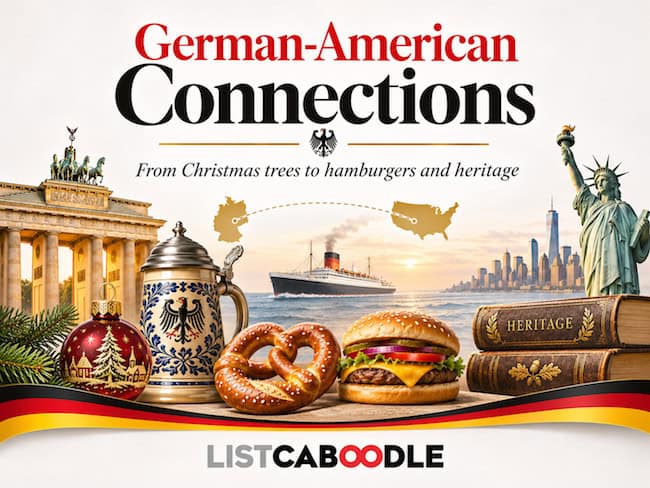
German immigrants helped shape America’s cities, schools, farms, industries, and holiday traditions.
81. German ancestry is extremely common in America
Tens of millions of Americans identify as having German ancestry, making it one of the country’s largest European ancestral groups.
Its influence is especially apparent throughout Pennsylvania, Wisconsin, Minnesota, Ohio, Missouri, and other parts of the Midwest.
82. German immigrants founded Germantown in 1683
Thirteen families from Krefeld settled near Philadelphia in 1683, establishing Germantown.
Many early German-speaking immigrants sought religious freedom and economic opportunities. Their arrival marked an important milestone in the development of German-American communities.
83. The Pennsylvania Dutch aren’t from the Netherlands
The term describes descendants of German-speaking settlers rather than primarily Dutch immigrants.
The name reflects historical terminology for Germanic peoples and their languages. Their cultural heritage includes distinctive dialects, religious traditions, folk art, and culinary practices.
84. German immigrants helped oppose slavery
In 1688, four Germantown residents signed a petition protesting slavery.
Their document became an important early expression of opposition to slavery in colonial America, reflecting moral and religious convictions that challenged prevailing practices.
85. Germans helped train the Continental Army
Prussian-born Friedrich Wilhelm von Steuben arrived at Valley Forge during the American Revolution.
His military training methods helped transform George Washington’s forces into a more disciplined and effective army. German efficiency proved particularly useful when independence was at stake.
86. German immigrants transformed American brewing
German-American entrepreneurs helped establish many of America’s best-known breweries, including names such as Pabst, Miller, and Anheuser-Busch.
Cities like Milwaukee and St. Louis became major brewing centers. The immigrants brought technical expertise as well as a considerable appreciation for the finished product.
87. The hamburger has a German connection
The name relates to Hamburg and the popularity of Hamburg-style chopped beef.
The modern hamburger sandwich developed in America, although competing stories surround its precise invention.
Perhaps we should simply thank both countries and order another one.
88. German immigrants helped shape America’s Christmas
German-born cartoonist Thomas Nast played an important role in developing familiar American imagery of Santa Claus.
Germany’s contributions also include several beloved Christmas customs and songs. The traditional American holiday season would look remarkably different without German influence.
89. German-Americans faced discrimination during wartime
During World War I, anti-German sentiment led to restrictions on German-language education, hostility toward immigrants, and pressure to abandon German cultural practices.
Even sauerkraut was sometimes renamed liberty cabbage. The hostility accelerated the disappearance of German-language traditions in many American communities.
90. German ancestry doesn’t automatically guarantee citizenship
Eligibility for German citizenship by descent depends on family circumstances and applicable nationality laws.
Germany has also established pathways for eligible victims of Nazi persecution and their descendants. Consult the German government’s official citizenship resources before submitting applications.
Surprising Things to Know Before Visiting Germany
91. The Autobahn has speed limits
Although some sections of Germany’s famous highway system have no general mandatory speed limit for passenger cars, many others do.
Traffic, construction, weather, and local regulations can also require reduced speeds. The Autobahn isn’t an invitation to reenact a Formula One race.
92. Many German shops close on Sundays
Sunday is traditionally protected as a day of rest, and most ordinary retail stores are closed.
Restaurants, some bakeries, and certain transportation-related shops provide exceptions. Buying groceries on Saturday can save you from discovering the regulation the hard way.
93. Germany has an impressive recycling culture
Separating household waste into different categories is an established practice.
Many beverage containers also carry refundable deposits. Look for the word Pfand when purchasing drinks. Your empty bottle may have more financial value than you expected.
94. Punctuality is generally appreciated
Arriving on time for appointments, meetings, and social engagements is considered courteous.
Of course, not every German is punctual, and anyone who has experienced significant delays on German railways knows that even national reputations have their limitations.
95. German conversations can be refreshingly direct
Americans accustomed to softening criticism may find some German communication styles surprisingly straightforward.
Directness isn’t necessarily intended as rudeness. Sometimes, when a German says something isn’t working, they simply mean that it isn’t working.
96. Cash remains useful in Germany
Although card and mobile payments are increasingly common, carrying some euros remains sensible.
Smaller businesses and traditional establishments may have limited payment options. Don’t assume that every charming village café operates like an American airport Starbucks.
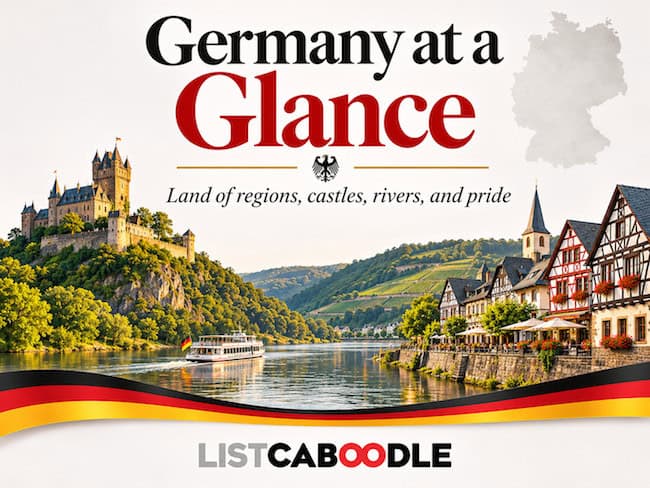
97. Germany has hundreds of castles and palaces
Medieval fortresses, royal residences, romantic ruins, and magnificent gardens reveal the country’s historically fragmented political structure.
Hundreds of former rulers apparently shared the same architectural philosophy: If you’re going to have a castle, make sure your neighbors notice.
98. Sorting out German surnames can be fun
Müller means miller, Schmidt means smith, Schneider means tailor, Fischer means fisherman, and Bauer means farmer.
Many German surnames reflect ancestral occupations. Your family name might tell you what a distant ancestor did for a living.
99. German ancestry extends beyond modern Germany
Historical German-speaking communities existed throughout Central and Eastern Europe, including territories now belonging to Poland, Russia, Romania, and other countries.
Genealogical research requires understanding historical borders. Your ancestor’s German birthplace might not be located in Germany today.
100. Germany is much more than its stereotypes
Modern Germany is a diverse society with numerous cultural influences, regional identities, religious traditions, and political perspectives.
Beer, engineering, sausages, and punctuality provide entertaining starting points. They don’t begin to capture the full complexity of the country or its people.
The German-American Legacy
It’s easy to overlook Germany’s influence on American culture because so much of it has become thoroughly American.
Consider a typical American family celebrating Christmas around a decorated tree. Their children attended kindergarten. Their ancestors worked on farms, in factories, or in breweries. On summer weekends, they grill hamburgers and bratwurst.
They may not speak a word of German, yet German culture surrounds them.
There’s much to admire about Germany: its intellectual curiosity, musical heritage, engineering accomplishments, regional traditions, and commitment to confronting painful historical truths.
If you’re fortunate enough to visit your ancestral homeland, explore beyond the major cities. Find the village your ancestors came from. Visit a local bakery. Wander through a Christmas market. Listen to the church bells ring.
And make time for some Kaffee und Kuchen.
As the Germans say:
Glück ist das Einzige, das sich verdoppelt, wenn man es teilt.
Happiness is the only thing that doubles when you share it.
Prost!

By M.L. O’Halloran
Founder and Editor, ListCaboodle
Mike O’Halloran founded ListCaboodle in 2017. He has authored four joke books, three books on basketball coaching, and co-authored four books on kids’ trivia.
His other websites include Sports Feel Good Stories and Greeting Card Poet.
He is the publisher of the Well-Prepared Coach line of coaches’ practice plans, off-season training guides for young athletes, and editable award certificates. The certificate line covers more than 15 sports, including baseball, basketball, football, hockey, golf, softball, tennis, and more.
Mike is married with four children.
You are on our 100 Things Every German-American Should Know About Germany feature.
You might also like:
